
Published: : December 2, 2025, 04:32 PM
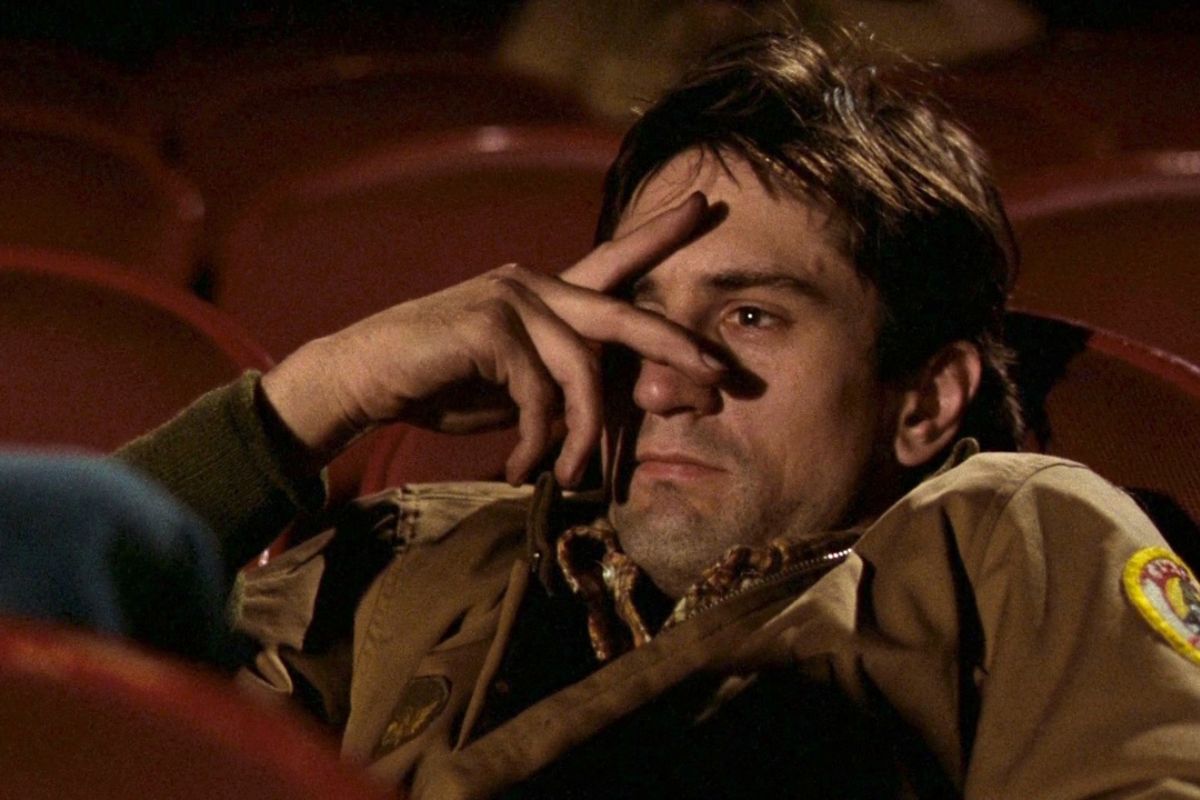
Taxi Driver (1976) brings forward the issue of a psychopath’s urge to cleanse the corrupted city, New York. The innuendo of the opening scene of the raining metaphorically hints at the process of baptizing the soul of a person prescribed in the Christian theology or religion. The city is displayed as a body with different kinds of living, non-living organisms. The protagonist, Travis wants to sweep off all the dirt and dust of the city to give it a new life, a new consciousness. The hippie culture, the Afro- American people, the pimps, the prostitutes, the jerks and their vulgar, incessant low life along with the false promises, corruption are the main things that he wants to diminish or remove from the surface of the society. He meets different people and each one shapes his perception of reality. Somehow, they drive him into taking up the hero like actions. This movie is read from perspective of the lonely man, Travis. It is his soliloquy, his art of representing his internal sensibilities. Loneliness follows him everywhere and through this expression, he shows the modern man's alienation. This movie examines the relationship between the city and human beings. Consequently, he becomes a flaneur who roams around the city and records all the ill happenings, corruption of this urban space. Taxi Driver becomes a narrative of a city as well as the travel narrative of a alienated man.
Travis hates humanity; he hates people; he hates corruption. He hates everybody that his eyes come across. He is a lonely man; he takes up the job of taxi driver in order to eyewitness the low night life, the morally corrupted alleys of the urban population. To his mind, he wants to act like a messiah or God’s single man as if he sees the reality through the eyes of God. Therefore, he wants to uphold the truthful, morally justified things in the society. He tells to Betsy that they are somehow destined or some kind of force has bought them together. He believes that they need each other as they are lonely in their respective lives. He cannot sleep at night. He watches porn movies to seek for solace. But the climatic situation happens when he accompanies Betsy to a porno movie; she feels uncomfortable and breaks up their short-term relationship. Her rejection makes him angry. He curses her as other people attributing her as ‘cold’ and ‘distant’. He expresses his angst by saying “I realize now how much she’s just like the others, cold and distant, and many people are like that, women for sure, they’re like a union.” (Scorsese, Taxi Driver) Then, he meets the bad mouth chauvinistic man in his taxi. He spies on his wife who maintains an extra marital relationship with a black skinned soul. He wants to kill his wife. The director of this movie, Martin Scorsese has played the role of this patriarchal man who wants to kill his wife. This murderous instinct somehow, fuels his anger, hatred, disgust against his notion of scum and dirt. Later, he meets Iris, an underage prostitute and comes to know about her life. He wants to rescue her from this hell and wants to send her to her parents. He becomes increasingly frustrated for the happenings of his society. To get success in his mission of saving the city, he changes his body into something else. He trains himself. He cuts his hair like a Mohawk and wears the military dress. He carries guns with him. In the shop, he meets a black man asking for more money to the shopkeeper but he cannot suppress his hatred for these people. He shoots him. Another strain of hatred against racism and women are intermingled together in order to give the entire story an organic whole. Here, his body is used as a metaphor which has been undergone some transformation just the way he wants to bring about a change in the reality. In this way, he tries to diminish corruption. The utmost suppressed cruelty in his mind is being dragged and extended over his body and later, into the society. He wants to cut some gangling limbs from the corrupted society which is the metaphorical extension of his body. Thus, his body becomes the miniature of New York city. While doing the rescue operation, he kills Matthew Sport, the man who lures Iris into this hell by churning some cliché words and playing some soft music. Later, the camera brings the audiences into his room that is filled with snippets of newspapers, gratitude letter written by Iris’s parents. The headlines of the newspapers sum up his journey from an alienated lonely man to a saviour. This movie, Taxi driver records the journey of a taxi driver who strolls around the city and becomes a flaneur. The greeting of Iris’s parents along with the words like ‘guest’, ‘home’ symbolically projects his short duration in the society during his pre-destined mission. He becomes the people’s man. He has succeeded a good position in the eyes of them. Travis is like a vagabond looking for homes but he cannot find one. He tries to make Betsy his companion. He fails. Later, he gets drawn to this action. His revelation on the diary “All my life what I needed was a sense of someplace to go” (Scorsese, Taxi Driver) affirms his urges for doing something that eventually causes his violent actions. A sense of rootlessness runs through the movie.
He sends flowers to Betsy; she refuses and they come back to him. Flower is a symbol of purity but there is no place of purity in the corrupted New York. The burning of the flowers mirrors up the gradual erosion of human passions and how it creates a moral, psychological void in the mind. In the last scenes, he reconciles with Betsy; she wants to give him money but he refuses. But, his gaze at her through the looking glass shows that his initial admiration of her as an image of a pure, innocent girl does not matter to him anymore. Her pure image influences him so much that he considers her a white, shining pearl in the heap of garbage. He wants to retain the pure image of the city. He uses her image as the blueprint of his mission. In the last scene, he vanishes into the thin air as if he has come to the earth to fulfil his duties; he has done and his soul goes upward like a spirit of an angel.
Travis, 26 years old, Vietnam war veteran narrator is lost in a deep sense of paranoia, madness. The script was taken from the experiences of the script writer, Paul Schrader who was going through his dark phase. He lived in his car during his loneliness after the tragic fall of his relationships. To him, Betsy is an angel. He is a frustrated, motivated ball of desires and aggression. He buys his 0.44 magnum. According to the Freudian images, this gun epitomizes his masculine aggression that has been converted into psychosis. The most climatic scene in the movie is when he talks with his mirror image. It also shows the little break between his real self and the made up one. He is dangling between his present and future. His obsession to do well also gets fueled when Iris gets into his car and says “Just drive.” His daydream about the mission of purification and organizing the city becomes true but the projection of the aftermaths remains sketchy and ambiguous. When the police comes he mimics a gun pointing at his head. He makes the sound of the gunfire. It is considered as his way to release his latent force from his body.
The Taxi Driver becomes a memoir of all loitering souls that want to do something remarkable for their own sake as well as for their surroundings. He feels alone and uprooted from his society. Thus, the movie shows the battle of an individual against the society. In the movie V for Vendetta, the director satirizes the notion of panoptical autocratic state that snatches away human freedom and liberty. V, itself is a metaphorical name that establishes his position as someone different from others. He wears black coat with a white mask. It shows that he is in disguise and along with this “curtain of appearances” he wants to perform his duty. Thus, these figures like Travis and V become the suppressed spirits of the civilization or the discursive voices that are termed as threats or rebel. Travis suffers from his existential crisis. He has none to share his feelings with. His only mate is his taxi. He utters his pain through these words- “Loneliness has followed me my whole life. Everywhere. In bars, in cars, sidewalks, stores, everywhere. There’s no escape. I’m God’s lonely man.”( Scorsese, Taxi Driver) On the other hand, his words like “Twelve hours of work and I still can’t sleep. Damn. Days go on and on. They don’t end” echo Beckett’s notion of nothingness reflected in the Waiting for Godot. He fails to establish his relation with the city. He is an aloof spectator, a wandering flaneur who sees the corruption and attempts to demolish.
In addition to this, the constant background soft Jazz music reflects the 70s New York city, people’s new growing obsession of Harlem Blues and jazz. The bohemian culture is being criticized here along with the failures of Government. This film is a masterstroke on the portrayal of an individual’s existential angst, suffering and crisis. He maintains a diary where he reveals his lonesome thoughts, feelings and desires. Here, the psychopath becomes the writer. Simultaneously, this movie also showcases the hollowness of the city life and its tragic side that commoditizes human feelings and bodies. Human becomes objects. They are sold in terms of money. His way of spending the night by watching pornographic theatres captures the cruelty and violence done upon bodies and eyes. In addition to this, he attempts to murder Charles Palantine. The most striking dialogues of Travis are- “You talkin’ to me? You talking to me? You talking to me? Well, then who the hell else are you talking – you talking to me? Well. I’m the only one here. Who the fuck do you think you are talking to?” ( Scorsese, Taxi Driver) He believes in the force of universe. He prays and says his gratitude to Him-“Thank God for the rain, which has helped wash away the garbage and trash off the sidewalks. I’m working long hours now: six in the afternoon to six in the morning, six days a week. Sometimes, seven days a week. It’s a long hustle, but it keeps me real busy. I can take in three, three-fifty a week. Sometimes even more when I do it off the meter. All the animals come out at night- whores, skunk pussies, buggers, queens, fairies, dopers, junkies, sick, venal. Someday, a real rain will come and wash all this scum off the streets.” ( Scorsese, Taxi Driver) To him, his taxi and his psychopathic mind become his weapon through which he gives salvation to the human kind. He indirectly starts considering himself as an equal to God. This movie is full of blood, revenge, exploitation and aggression. The readers see the reality of the movie through Travis’s eyes as if he becomes the omnipresent narrator. Unchecked impulses, cannibalistic murderous instincts become the tool to assert the violence upon everybody. Iris’s body is not pure. She has been exploited and becomes the victim of sexual desires of the city monsters. In the last scene, Travis and Betsy meet but they leave. It depicts how love, attachment fail to overcome corruption.
Thus, this movie captures the intricate relationship between the urban space and living souls and how they become flaneurs in the corrupted society. It also examines the saga or the narrative of a male gaze who tries to find purpose in the city. This movie transgresses the boundary of time and space and becomes an old classic. Though it's a classic, it must be re-read from different angles and perspectives due to its unique storytelling and cinematography.
Bibliography:
Scorsese, Martin. Taxi Driver. 1976
Beckett, Samuel. Waiting for Godot. Grove press. 1954
https://share.google/HFAV8KrXce4AgXxe2
https://share.google/OXigzqeYtFRcvxSPM
Baudelaire, Charles. The Painter of Modern Life and Other Essays. Translated
and Edited by Jonathan Mayne, Phaidon Press, 1964
https://share.google/CCdIQRz8yxgbReQLi